Friday, April 27, 2007

WEEK 7

Creative Computing : Synthesisers and Definations(2)

Code : My code had got some serious errors.. I am working on it..Will update it very soon..

Understanding the arguments in Sine wave Oscillator

SinOsc.ar(freq, phase, mul, add)

freq = The frequency of the oscillator. The default is 440hertz.

phase = the offset time position where the wave hits a zero crossing. The default is 0,which means the wave starts immediately

mul (multiplication) = think of this argument as the Amplitude or Volume of the wave. The default is 1.The scale or range of the interpolation (whether the wave goes from -0.5 to +0.5, or -30 to +30)

add = The frequency position from which the wave oscillates. (used mainly for Control Rate oscillation).
"It is useful when you require the oscillator to interpolate between specific values. The default add value is zero, because an audio rate oscillation moves from -1 to +1. By changing the add value to 5,the wave would oscillate between 4 and 6 if the 'mul' value remained the default of 1".

References:
1)Haines, Christian."Creative computing : Semester 1, Week 7. Synthesisers and Definitions(2)." Lecture presented at the Electronic Music Unit, University of Adelaide, South Australia, 26/04/2007.
(2)McCartney , James et al 2007,SuperCollider Inbuilt Help.
(3)Source Forge,http://supercollider.sourceforge.net/
(4) SuperCollider Help Book
(5)http://www.psi-o.net/pseudonym visited on 1 May'07


Audio Arts :
First lesson after the break and I was 10mins late, sorry david I missed my tram cause it came a minute early(very annoying).When i reached , all the microphone placements had been done.We were recording one of the ensembles from the jazz department.I learned how to communicate from the recording space into the studio when there is no listening microphone and talk back facility.The rule is to be very informative through hand movements.However I suggest you setup the talk back facility in order to be absolutely explicit,restricting any possible frustration.I also suggest to get absolutely familiar with newer version of protools.Visit this link for an overview of updates for protools LE 7.3.x

Due to the time strains with studio bookings, my timings, band members availability I could not record another ensemble.However I am using the same recording and here is a rough mix of 'Perdido"by Monk played by "The Quintet of j0hn n j0sh"

=================================
Forum : Gender in Music Technology
==============================
I hate the words "male domain" or "feminism" which was repeated several times in that 1+ hour..Personally I hate dividing people into categories,now if that is culture , language , country or SEX, it does not matter.We all are one,children of one and the continuation of one.
One of the stratagies of few ruthless people is to 'divide and conquer', a big reason why India was ruled by the same people.I really dont like to write for people to read, cause I dont like to hurt anyone, anyway now I am doing it .
Look at this cable , its a male-male s-video cable..Look at it nicely, what does it say to you..?
Stephen started the forum with his thoughts about how big the issue is in the industry.on the topic..Besides the other things interesting things he said,something which striked me was to know a little more about John Cage .It obviously did not effect what I think about him and his music.I personally can not relate to the emotions of gay men.I think they play with the rules of nature.The science says two similar magnetic poles repel each other and opposites attract. Dont know why are two similar poles trying to charge one another.
Now consider the input - output theory.What will happen if you plug output of protools into output of your amp. You will only hear the world around you.Max/Msp does not even let you do that.It wont give you the option of plugging In in In or out to out.In SuperCollider you can but what will be the result,either No sound or feedback.
But YOu do get gay cablesnow ,like this one.
Why are there less women in the field of (M) Technology.It may vary from one country to another.The way they pursue things,restrictions on women and things which women like to do.For instance I see alot of women from china (and alike) in my Computer Science lecture than from any other country. One of my mates from banglore in India has complained me about not having (p?) women in his IT profession.Shine your light F e m a l eFs on "musIc tEch",what you doing ??
Todays Presenters:
Ben, I am sure you will qualify for a white collar job ,I can see u as a good communicative teacher...With a laptop in front I felt like a man..I really enjoyed it..
Amy convinced me that she loves Music Technology and thats why she is doing it.If she would have said it one less time, I would not have believed her..
Thanks for the videos jake. Message to all the women out there from Jake Morris - "listen to bjork and get inspired".
Why are the best chefs men ?? reply your answers to Douglas Loudon (I know some worst chefs in this planet and they are men.)
I can see its a new area and women are taking there time to get into it. Regardless there are some brilliant composers and performers who are women.
One of the figures in EMU is Poppi.Replacing her presence in the forum was a tiny robotic eLecTro feMale,may be her slave,sonically capturring the whole event..Not just her, Sonia wilkie, Jasmin ward and Silver Moon are more examples of women at EMU, with Amy and Laura starting their carrier.Another inspiring figure is Fleur Green, a great percussionist and a good friend of mine.Her recent collaborations with a theatre company compelled her to buy a laptop & ProTools and compose music for kids theatre.I am not sure how far as she gone, I guess she spends more time practising marimba and other percussions.She will, I am tempting her.
It's quite interesting how individual conditions effect.A lot may depend on the up bringing of a child. Why do girls in their childhood like to play with dolls and boys with cars, for instance.. Or is it just what they are given in their hands ...! They definately get attracted to things which appeal them. Any men out there, attracted to dolls when they were small or now.. ?? get back to me please.. cause I am too,, living dolls..
Is it actually gay for a men to wear pink t shirt, dont know, may be light pink with a white rose..!
Why am i discussing this, because I have been to Mars bar twice..Liz told me its quite a liberal place and plays different music.. Both the times with Bianka and the couple [Darren = Brad].

References:

Whittington.Stephen . “Gender in Music Technology, Can you tell the difference?” Forum /Workshop presented at EMU space, Level 5, Schulz building, University of Adelaide, 26th April, 2007.

Ben Probert. “Gender in Music Technology.” Student Presentations. EMU space, Level 5, Schulz building, University of Adelaide, 26th April, 2007.

Douglas Loudon. “Gender in Music Technology.” Student Presentations. EMU space, Level 5, Schulz building, University of Adelaide, 26th April, 2007.

Amy Sincock. “Gender in Music Technology.” Student Presentations. EMU space, Level 5, Schultz building, University of Adelaide, 26th April, 2007.

Jacob Morris. “Gender in Music Technology.” Student Presentations. EMU space, Level 5, Schultz building, University of Adelaide, 26th April, 2007.

Sunday, April 15, 2007

WEEK 6

Creative Computing : Synthesisers and Definitions (1)
SynthDef's = Synth Defination : Templates or blue prints that are usually used to describe the structure of a synthesiser, namely the component unit generators that are arranged into some form of synthesis device.

Code for SynthDefs examples

Transmission code

Receiving Code

References:
1)Haines, Christian."Creative computing : Semester 1, Week 6. Synthesisers and Definitions." Lecture presented at the Electronic Music Unit, University of Adelaide, South Australia, 5/04/2007.
(2)McCartney , James et al 2007,SuperCollider Inbuilt Help.
(3)Source Forge,http://supercollider.sourceforge.net/
(4) SuperCollider Help Book

Mondays at Exeter

"Seeing Orbo" - Live at the Exeter, every monday in April @ 8.57 pm till midnight..
{246 Rundle Street, Adelaide}

"Seeing Orbo" - {Acoustic fusion^world^folk^pop ,from the familiar to the exotic,songs of life,the dark and bright.The shadow and light of human experiences and existence..}


Declan Lorenzin- vocals,flutes & reeds
Max Lorenzin- vocals, guitar
Vinny Bhagat- world percussions
Kym Gluyas - saxophone

Monday, April 02, 2007

WEEK 5

Creative Computing : Week 5 - Unit Generators

Task : Create a synthesiser code patch that demonstrates your understanding of unit generators. The code patches will need to select a form of synthesis (such as FM, AM,Additive etc) and integrate the base components of a synthesiser including pitch,amplitude and modulators.

Click here to download the code.

References :
(1)Haines, Christian."Creative computing : Semester 1, Week 5. Unit Generators." Lecture presented at the Electronic Music Unit, University of Adelaide, South Australia, 29/03/2007.
(2)McCartney , James et al 2007,SuperCollider Inbuilt Help.
(3)Source Forge,http://supercollider.sourceforge.net/
(4) SuperCollider Help Book

--------------------------------------------------------------------------

Audio Arts : String Recording
String instruments represent a group of instruments whose sound is produced by a string vibrating in a resonant body, chamber or sound board. The physical structure and playing mechanisms vary significantly between violins, viola, cellos, guitars and pianos.The manner in which they are played varies and includes techniques like bowing, plucking, striking, scraping or a magnetic field.
One of the most important characteristics shared by all instruments in the string family is the wide range of tonal colours that different instruments are capable of producing. This is principally due to the individual qualities of the wood used in their construction, the details of their internal design and the skill and technique of the performer.
The best position for the microphone is far easier to understand than to know how the particular instrument works .However,in order to be highly succesful, learning the frequency spectrum of the instrument, where and how the sound is produced, how it radiates into the room will help you in making better decisions.

Recording Example : For my recording exercise I invited Ruth Saffir - Lecturer in Cello and Pedagogy at the Elder Conservatorium of Music and the President of the Dalcroze Society of South Australia.She is a cellist with many years' experience as a performer and teacher. Contact : (ruth.saffir@adelaide.edu.au)

I remember the first time I met Ruth was outside the Elder Office. My first day of uni and she took me to level 5 (EMU) and introduced me to christian. She was my Aural teacher last year , helping me train my ears. Thank you very much Ruth, for coming to the studio and helping me out.

Microphones Used :
Beta 52 : close miked to the f -hole , left of the player
AKG 414 : close miked to the f -hole , left of the player
Newman Kmi : little far as compared to AKG from the f -hole , right of the player.
U 87 : Room microphone, 3-4 metres infront of the player at ear level.

The most levels I have used in the mix is Beta 52 and U-89, whereas the other micophones are nearly half of their levels.It sounded too bright and detailed when close microphones were up.The scratch recording I initially did, ruth pointed out it be really "dry" but then room microphone levels were quite less and it was placed parallel to the instrument nearly 4-5 metres way.After changing its placement and giving it a little more gain , I tend to really like the warmness and space reverbrations.

References :

(1)Grice, David.2007.Tutorials on Audio Arts (3).27 March'07.University Of Adelaide.2007
(2) Readings on My Uni.Music Technology(3)2007.
(3)Robjohns, Hugh 1999, Strings Attached, Sound on Sound, viewed 2/4/ 2007,
http://www.soundonsound.com/sos/apr99/articles/recstrings.htm

Monday, March 26, 2007

WEEK 4

Audio Arts : Recording Wind Instruments : Wind instrument contains some type of resonator (usually a tube), in which a column of air is set into vibration by the player blowing into (or over) a mouthpiece set at the end of the resonator. The pitch of the vibration is determined by the length of the tube and by manual modifications of the effective length of the vibrating column of air.
Microphone placement depends very much on where most of the sound comes from. Learning the basic charaterstics and dynamic range of the instrument will help you in making your decisions about the choice of the microphone and its placement."Condensor microphones with a cardiod pattern will normally give you satisfactory results"(1).However, play with your creative ideas until it sounds what you want..
Lecture Notes : Kym arrives at EMU with his tenor and baratone..We started with learning the sweat spots of the room, a general idea of the instrument and different microphone placements .It is quite interesting how different microphones produced different timbre. Combination sounds of Sm 57,Beta 56, Beta 52, U-89 gave interesting results.
However for this recording I invited Imm Cielens
..(Click his name to listen to the recording)

Microphones Used:
Sm58 - pointing at the bell ,nearly 1 metre away,
AKG 414 - lower in height and pointing towards the bottom holes
Beat 52 - Along side AKG, pointing the holes
U-87 - Room microphone, infront of him, at his ear level

Trombone Recording : I invited Kara to the play for me..(Click her name to hear the recording.)
Microphone Used :
Sm 56 - pointing the bell, about 1.5 metres away at an off axis angle
AKG 414 - pointing the bell, about 1.5 metres away, quite straighter( main microphone)
Beta 52 - pointing the bell, about 1.5 metres away at an off axis angle
U-87 : Room Microphone , at her ear level from the back

References:
(1)Readings on My Uni.Music Technology(3)2007.
(2)Grice, David.2007.Tutorials on Audio Arts (3).20 March'07.University Of Adelaide.2007

Thursday, March 15, 2007

WEEK 3

Audio Arts : Percussion Recording

Examples : Click on the desription to hear the recording.
All sound recordings copyright Shivna Kaun @ 2007


Mallets ,
Hot Rods ,
Sticks(1) ,
Sticks(2) ,
Tabla


Getting a good sound from an acoustic dum kit has always been a challenge. I cant express how much a good sounding kit can contribute to a track.I believe one of the reasons for musicians using sequenced drum tracks is the lack of quality acheived from acoustic kit especially in a low budget or in home studios. Follow some of these measures and get most out of your beautiful drums.
To start with, make sure your skins are fairly new and are tuned accordingly.All the nuts are tight and are not in contact with any another drum as this will produce undesirable noise.There are various techniques which one can apply depending on style/genre/skill of the player.When recording a rock or metal band the focus lies on giving as much detail whereas a jazz player would like more acoustic properties of the space blended with the sound of his kit.The same applies to classical players or world musicians.

Close Miking: This is a very common practise for live situations in larger venues and is very often used in recording studios. Each drum of the kit is closely and separately miked giving you every possible detail.
Always follow the 2 finger rule I.e place the microphone nearly 2 fingers above the top skin.

Note : Always follow one standard order of patching the cables in the platchbay.Here is the orer that I like to follow
1- Kick , 2 - Snare Top, 3 - Snare bottom , 4 - High tom . 5 - MidTom . 6 - Low Tom , 7 - Hi Hats , 8 - Left Overheads . 9 - Right Overheads , 10 - Room Microphone.

Kick: Hole mounted, not touching; 15-20 cms from the skin.Applying correct padding is very important as this will contribute largely on the thickness and punch of your bassdrum.Make sure you pedal is not making any unnecesssary noise.
Microphone choice: Beta 52 is ideal choice, alternately you can use AKG's or Sen MD421 if thats not available.

Snare: Snare requires a mic that can handle very high SPL so a dynamic microphone is usually chosen. To avoid picking up the hi-hat in the snare mic, aim the null of the snare mic towards the hi-hat.We applied another microphone at the bottoom of the snare to capture the vibrations produced by bottom skin from the snares.This can give you interesting results as the gros notes would be more audible. But, remember the phasing issue caused by microphones facing each other.Inverting this track would correct it .A combination sound of both the microphones would give you a desirable result.
Microphone choice: Shure Sm57, 58 , Sen 825

Toms: Having individual microphones for both your toms will give you more flexibility,again, apply 2 finger rule.
Or you can use(depending on the genre of music) one microphone with a wider polar pattern between 1st and 2nd Tom, close to the head (approx 5-10cms depending on how it is sounding). Alternately one can use NT4, as it would give each mono channel for both the toms.
Have an individual microphone for your floor tom and apply similar techniques.
Microphone choice : Beta 57A, I applied Beta 52 to the low tom for a more thicker sound.

Overheads : Cymbals (ride, crash, splash, china, hi hats): The brilliance and high frequencies of cymbals are picked up best by a flat response condenser mic. Two condenser microphones panned hard left and right at a reasonable height above the toms.
Microphone choice: NT5, Newman K57i.

This would give the stereo image of the recording source. Also, a pair of microphones at a distance captures instrument timbres more accurately than close up mics. Close-miked instruments sometimes sound too bright, edgy, and detailed.This is what the player has to decide depending on the genre of music he is playing and the sound he is after.

Choice of Microphones: Omni, condenser with a large diaphragm about 1.5-3 meters from each other. Microphones like NT5's capture the high ends really well.Also you can use U87/89; AKG C414

Room Microphone : Always have a room microphone placed at the sweet sounding spot in the room.This will capture the reverbrations and the fullness of the room.. For away from the kit,listen to the room and place it ,where it sounds best. Newmans U87/89 are usually the best room microphones.

Panning the Drums : Panning will help you in projecting the correct image of the kit.Imagine the kit from the perspective of the listner and pan it accordingly. Remember , its the other way round of how the player will perceive it. For e.g. Hi tom is panned to approx 80 % right and Low toom approx 70% left.Whereas your overheads are panned hard left and right.Imagine the placements of each drum and pan it,as it exists in the physical world.

Drum kit is what drives the music together with the bass player.Spend as much possible time on getting just the right sound you are after.
Apply correct microphone placement techniques with "just" the right gain structure.
{Good Luck..!}

References :
(1)Grice, David.2007.Tutorials on Sound Engeneering (3).13 March'07.University Of Adelaide.
(2)Readings on My Uni.Music Technology(3)2007.


Creative Computing :
* Server Architecture,
* Open sound control ,
* Interconnected musical networks

Forum : David Harris and his orchestra : Quite a lot of fun actually ..

Tuesday, March 13, 2007

WEEK 2


Audio Arts :Multi Micing (2)

Recording in 5.1 Surround Sound
:The best known spaced-mic arrangement is probably the so-called 'Decca Tree' using three large-diaphragm
omnidirectional mics arranged at the ends of an inverted T, typically measuring roughly two metres across and 1.5 metres deep. However, there are many alternatives and variations including the Faulkner Array and binaural techniques such as the Jecklin Disc
*Faulkner Array belongs with the spaced array stereophonic recording systems, where only the time of arrival difference is involved in the distribution of phantom sources across the loudspeaker base-line.
*A Jecklin Disk is a sound-absorbing disk placed between two microphones to create an acoustic "shadow" from one microphone to the other. Always, a matching pair of omnidirectional microphones are used.


The Ambisonics approach is equivalent to the stereo coincident system, and a spaced surround array is the equivalent of the Decca Tree.

Reference :
(1)Grice, David.2007.Tutorials on Sound Engeneering (3).5 March'07.University Of Adelaide
(2)(3) Readings on My Uni.2007.
https://myuni.adelaide.edu.au/webapps/portal/frameset.jsp?
tab=courses&url=/bin/common/course.pl?course_id=_172363_1&frame=top
(3)http://www.sengpielaudio.com/TonyFaulknerPhasedArray06.htm ,12 March'07
(4)http://en.wikipedia.org/wiki/Jecklin_Disk ,12 March'07

Friday, March 09, 2007

"Music of Spheres" -Adelaide Fringe 2007

"Music of the Spheres" - Live at the Adelaide Planetarium. 23,24 25 March'07 @ 7.30 pm , $23
'There is geometry in the humming of the strings.There is music in the spacings of the spheres.- Pythagoras (580-500 BC).

Lying back on comfortable chairs experience the heavens open before you in a breathtaking visual-musical performance. You will be immersed into the colour and sounds of the outer reaches of the universe. As you become enveloped into the 'Music of the Spheres. A performance that truly expresses the music of the spheres in the 21st Century, using actual real sounds and visuals from space

Proudly brought to you by :

Darren Curtis : Artistic director/Performer,
Bradley Pitt : Amateur astronomer,
Martin Lewicki : Planetarium presenter,
Vinny Bhagat; : Performer/Technical Support

Monday, March 05, 2007

Week 1

Creative Computing : Introduction to Super Collider :

Task of the week : "Create a function that takes two arguments - (1) pitch class and octave number - and produces the corresponding the MIDI note number. (2) Create a function that can convert the pitch class and octave number into its corresponding MIDI Note number and then into its corresponding frequency."

I am still working on writing the code for this..I can clearly understand what i have to do but writing that in supercollider is a bit difficult right now..,However I am not very far from it.. (2.40pm, 7march'o7)

Key concepts:

Pitch class : {Cn} = { C-2, C-1, C0, C1, C2, C3 ...}

var Pitch class = [ C-2, C-1, C0, C1, C2, C3, C4 , C5 , C6 , C7 , C8 ]

var midi note names = [ [ 0, 12 , 24 , 36 , 48 , 60 , 72 , 84 , 96 , 108 , 120 ]

pitch class = midi note name

var semitones = [0 , 1 , 2 , 3 , 4 , 5 , 6 , 7 , 8 , 9 , 10 , 11 ]

var note names = [C , C# , D , D# , E , F , F# , G , G# , A , A# , B ]

semitones = note names

A3 = 440 HZ, which is midi note no 69

var frequency = [ A0 , A1 , A2 , A3 , A4 , A5 , A6 ]= [55 , 110 , 220 440 , 880 , 1720 , 3520 , 7040 ]

I need an algorhythm to relate all these concepts .. I am thinking...!!

expr (440. * exp(.057762265 * ($f1 - 69.))); -- How do i put this algorhythm into supercollider ??
---------------------------------------------------------------------------------
Audio Arts:
Sound Engineering (3) as this component is called aims to covers a wide range of topics..I am glad we have a list of areas we will be covering each week..To start of, wk 1 is about Multi Micing..

Why record Stereo ? "The principle of binaural recording is to replicate the way our ears capture sounds, and replay those sounds directly into the corresponding ears(1)."
It preserves depth, perspective, and hall ambience -- all when you use several closeup mics, panned into position..Further, a true stereo recording conveys
* the depth or distance of each instrument
* the distance of the ensemble from the listener (the perspective)
* the spatial sense of the acoustic environment--the ambience or hall reverberation.

Goals of stereo Micing : " Accurate localization", i.e. "the reproduced instruments should appear in the same relative locations as they were in the live performance".

Polar patterns : Get familair with all the polar patterns and their uses before learning the various stereo microphone techniques..

* Half-omnidirectional or hemispherical: Picks up equally over a 180 spherical angle.
{All of the following patterns are considered unidirectional because they pick up mainly in one direction.}

* Cardioid: “Heart-shaped” pattern that offers maximum rejection (null) at the rear of the microphone.
* Supercardioid: Has a narrower pickup pattern than cardioid, but also has some rear pickup. Note that there are two nulls of maximum sound rejection.

* Hypercardioid: Has a narrower pickup pattern than supercardioid, but also has more rear pickup than supercardioid. Note that there are two nulls.

* Bidirectional (figure-eight or cosine): Picks up mainly in two directions (in front of and behind the mic) and rejects sound from the sides.

Various Stereo Microphone Techniques :

* Spaced Pair :

* Coincidnt pair or XY/intensity streo method :

Method : 2 directional microphones mounted over top with diaphragms one above another,nearly touching,angled apart towards the left and right side of the recording source.."The greater the angle between microphones, and the narrower the polar pattern, the wider the stereo spread". (quotes taken from readings on my Uni )

* Mid side : click here to listen to the recording example
Location : EMU
Track : "Om Jai" using mid side technique

* Near Coincident pair

* Baffled Omni Pair

*******{Recordings coming very soon }

References:
(1) http://www.soundonsound.com/sos/1997_articles/mar97/stereomictechs2.html
5March'07
(2)Grice, David.2007.Tutorials on Sound Engeneering (3). 27 Feb'07.University Of Adelaide.
(3) Readings on My Uni.2007.
https://myuni.adelaide.edu.au/webapps/portal/frameset.jsp?tab=courses&url=/bin/common/course.pl?course_id=_172363_1&frame=top
(4) http://www.crownaudio.com/mic_web/tips/mictip2.htm 5 March'07

BAck to UNI - Final semester

The final semester for my study in Adelaide..
Doesn't feel like 3 years.. Time really flies.. I am really excited about things,esp visiting delhi, with a whole new experience, alot of memories and an everlasting love for my artNmusic.
Thanks to all the beautiful people responsible for this.

Here is the list of courses I am currently enrolled in..

*Music Technology 3
*Music in Context: Jazz 3
*Music in Context : Music since 1900( classical theory 3)
*Computer Science 1A

Thursday, March 01, 2007

Music & Narrative

Music and Narrative : The art of story telling through Music..

“Is not music the mysterious language of a distant realm of spirits, whose lovely sounds recho in our soul and awaken a higher, because more intensive life" ?

Click here to read my full paper for Foundation for Honours..

Thursday, November 02, 2006

Wk 13

My Malets exam :I never wanted to give such a performance to jim..I could not answer some really basic questions.At first he asked me to play "Take the A train" - i couldnt play the melody,i played the chord changes, were they right, may be..he asked me to play "straight no chaser" - i stoped 3 times stil couldnt play the run which connects the head.Well, i played the chord changes..Then he asked me few questions about modes, which i answered then all right..he asked me few other analysis questions some of them were right and the others were just guesses..i wasnt sure about the mode which fits with f#-7b9..Whats the difference between 8 note dominant and atlered sclale, i was just guessing, he knew it, he didnt asked me anything else, he said "you are done, you may go....."

Friday, October 27, 2006

Miles Davis

“I'm always thinking about creating. My future starts when I wake up every morning . . . Every day I find something creative to do with my life.

Miles Davis { b May 25, 1926 }


It's always been a gift with me, hearing music the way I do. I don't know where it comes from, it's just there and I don't question it.”- Miles Davis


( Bandleader, Composer,performer - Trumpet, Flugelhorn, Organ)

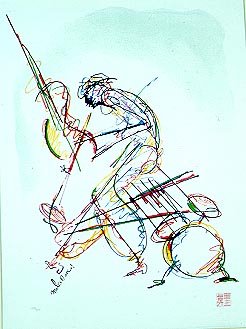
These quotes are so inspiring and so are is the image drawn by miles which is called "jazz"..

Quotes from his website -- " Miles Davis was the "Picasso of Jazz," reinventing himself and his sound endlessly in his musical quest. He was an artist that defied (and despised) categorization, yet he was the forerunner and innovator of many distinct and important musical movements."
In his autobiography, Davis stated that this criticism was made because no critic could categorize this music and complained that On the Corner was promoted by the "traditional" jazz radio stations, therefore not to young African-americans. Miles himself thought that the record would be "something for black people to remember me by".


On the corner was released in 1972 – I hope I was born in 70’s, the time I have never seen ..!!
Davis refused to be confined by the expectations of his traditional audience or music critics, and continued to explore the possibilities of his new band. As he stated in his autobiography, he wanted to make music for the young afro-american audience. On the corner showed a seemingly effortless grasp of funk without sacrificing the rhythmic, melodic and harmonic nuance that had been present throughout his career. The album also showed the influences of Paul Buckmaster's studio arrangements and Stockhausen in its layered recording and post-production editing. The album was highlighted by the appearance of saxophonist Carlos Garnett. The record provoked fierce arguments from many critics, with one British critic noting: "I love Miles, but this is where I get off."
In the early 1970s, Miles kept experimenting with the electric instruments and fusing more funk into his music. In 1976, a combination of bad health, cocaine use, and lack of inspiration caused Miles to go into a 5-year retirement. He conquered his cocaine habit, received new inspiration and returned in 1981 and made a series of records . He did keep pushing music, as he was not one to rest on his feet and play his old music. He started experimenting more with synthesizers and using studio techniques in his recordings. He won a series of Grammy Awards during this decade and continued turning out sidemen, such as Garrett, Stern, and Berg,. Miles Davis died in 1991.

Thursday, October 26, 2006

Week 12

Game Project:My game project has been quite a learning experience for me and esp working with Marcus Kennedy,a dedicated/creative 3D graphic artist.Although I am still relying on still images,my perception of the game seems to get a little better than before.I would like to have a short animation of the game which familiarises me as how the enviornment will look like.The good news is that my group will have a single level playable demo of the game by the end of this year.
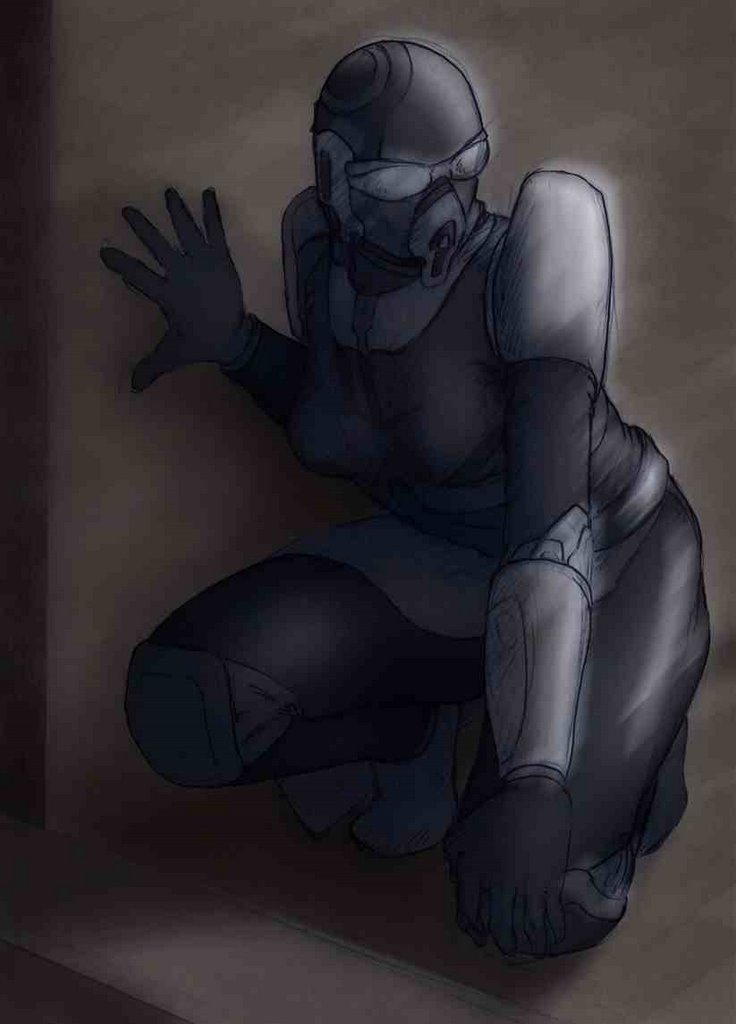
Player character "Vess":
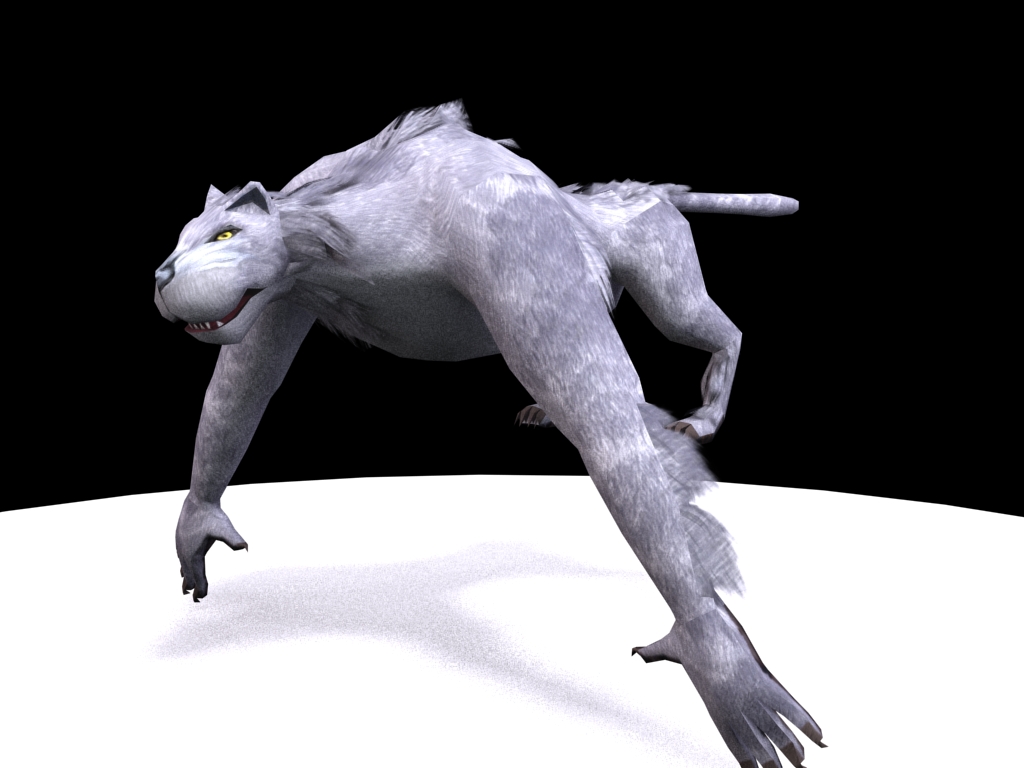
Enemy "Oranju":

{Images copyright @ Emergence Games}

-------------------------------------------------------------------------------------
Tuesday was the day for my Foundation for honours presentation on the hot topic "Narrative and Music" -- The art of story telling through music.Everything came out really naturally,I certainly had a lot to say about it and that's why I went 5 mins overtime(that is bad,i forgot to start my stopwatch and obviously then lost the time) .The sound system in Hartley 108a should be now in Adelaide Heritage Musuem ,it is horrible.If given the authority I am quite happy to transport it there.

Creative Computing :Processing (3)
*Comb filtering
*Configuring MSP via the DSP object

Comb filter: Simply a filtering delay line."The comb~ object implements a comb filter, in which a slightly delayed version of a signal is added to itself, causing phase cancellations and a spectrum that looks like a comb". The filter implements the following formula:y[n] = a * x[n] + b * x[n - delay] + c * y[n - delay]

Karplus strong - string/plucked metal sounds

Basics of Granular Synthesis:"The grain is a unit of sonic energy possessing any waveform, and with a typical duration of a few milliseconds, near the threshold of human hearing. It is the continuous control of these small sonic events (which are discerned as one large sonic mass) that gives granular synthesis it's power and flexibility"(1).(Kuehnl, Eric).A basic grain generating device would consist of an envelope generator with a gaussian curve driving a sine oscillator.

Check out Nathan Wolek's site on granulation: www.nathanwolek.com

-------------------------------------------------------------------------------------
Well nothing seems to change much,besides no on really tries anything.I need to change alot of things in me and around me which would probably help me for the rest of my life.Things have changed or rather I have changed.I know why is that but was anything in my hands.I was helpless but to give my time for work(work other than music) and besides my constant effort of it not affecting me,it has screwed me.I am scared to do that again.The time has gone anyway but I look forward to cover up everything which I have lost in this time.

References
(1)Kuehnl, Erich.2006.Paper On granulation.http://music.calarts.edu/~eric/gs.html
(2)Haines,christian.2006.Practicals on Creative Computing:Max/Msp.University Of Adelaide.
(3)Msp~ Tutorials and Topics.2006.Cycling 74
(4)Emergence Games.2006.Reference still Images of characters.

Wednesday, October 25, 2006

Week 11

Creative Computing:Msp
Processing (2) : Other delay line derivative effects such as chorus, flange, etc.
Building Graphical Interfaces :Check out www.guistuff.com

Delay line Objects:
tapein~ :Input to signal delay line.It receives a signal in and copies into a delay line.
tapout~ :Output from signal delay line.It outputs a delayed signal that was fed to tapin~. It has one or more inputs to specify delay time and a signal output and you connect a tapin~ object to one or more tapout~ objects.

Note:"Different materials absorb sound to varying degrees, and
most materials absorb sound in a way that is frequency-dependent. In
general, high frequencies get absorbed more than low frequencies".

Controlling Amplitute: The normalize~ object allows you to specify a peak (maximum) amplitude that you want to sent out its outlet. It looks at the peak amplitude of its input, and calculates the factor by which it must scale the signal in order to keep the peak amplitude at the specified maximum. So, with normalize~ the peak amplitude of the output will never exceed the specified maximum.

Patch for Delay line Feedback: Set dry/wet levels,R & L Delay level,R & L direct Level,R & L Delay time and R & L Feedback time.

#P window setfont "Fixedwidth Serif" 10.;
#P window linecount 1;
#P message 19 240 14 1441802 0;
#P newex 19 219 53 1441802 loadbang;
#P newex 337 414 54 1441802 *~ 0.2;
#P newex 192 442 40 1441802 *~ 0.2;
#P window setfont "Sans Serif" 9.;
#P message 355 457 29 196617 stop;
#P message 286 457 67 196617 startwindow;
#P newex 192 484 48 196617 dac~;
#P window setfont "Fixedwidth Serif" 10.;
#P newex 148 387 31 1441802 *~ 1;
#P newex 337 385 32 1441802 *~ 1;
#P window setfont Times 10.;
#P comment 367 347 82 1310730 Right Direct Level;
#P window setfont "Fixedwidth Serif" 10.;
#P flonum 359 363 69 10 0. 1. 3 22 0 0 0 221 221 221 222 222 222 0 0 0;
#P flonum 169 362 62 10 0. 1. 3 22 0 0 0 221 221 221 222 222 222 0 0 0;
#P window setfont Times 10.;
#P comment 153 341 77 1310730 Left Direct Level;
#P user hslider 56 265 18 76 101 1 0 0;
#P window setfont "Fixedwidth Serif" 10.;
#P newex 56 288 43 1441802 * 0.01;
#P window setfont Times 10.;
#P comment 57 249 23 1310730 Dry;
#P comment 125 247 22 1310730 Wet;
#P window setfont "Fixedwidth Serif" 10.;
#P newex 56 313 68 1441802 expr 1-$f1;
#P window setfont "Sans Serif" 9.;
#P comment 235 341 78 196617 Left Delay Level;
#P window setfont "Fixedwidth Serif" 10.;
#P flonum 245 362 62 10 0. 1. 3 22 0 0 0 221 221 221 222 222 222 0 0 0;
#P window setfont "Sans Serif" 9.;
#P comment 463 347 85 196617 Right Delay Level;
#P window linecount 2;
#P comment 210 235 47 196617 Left Feedback;
#P window setfont "Fixedwidth Serif" 10.;
#P flonum 464 363 62 10 0. 1. 3 22 0 0 0 221 221 221 222 222 222 0 0 0;
#P window setfont "Sans Serif" 9.;
#P window linecount 1;
#P newex 447 387 27 196617 *~;
#P newex 307 386 27 196617 *~;
#P message 338 39 29 196617 stop;
#P message 269 39 67 196617 startwindow;
#P newex 269 82 31 196617 adc~;
#P comment 191 146 81 196617 Left Delay time;
#P flonum 428 158 62 9 0 0 0 3 0 0 0 221 221 221 222 222 222 0 0 0;
#P flonum 378 233 62 9 0 0 0 3 0 0 0 221 221 221 222 222 222 0 0 0;
#P newex 361 261 27 196617 *~;
#P newex 361 200 56 196617 tapout~ 1.;
#P flonum 202 214 62 9 0 0 0 3 0 0 0 221 221 221 222 222 222 0 0 0;
#P newex 269 240 27 196617 *~;
#P newex 269 199 56 196617 tapout~ 1.;
#P flonum 200 160 66 9 0 0 0 3 0 0 0 221 221 221 222 222 222 0 0 0;
#P newex 361 158 65 196617 tapin~ 1000;
#P newex 269 159 65 196617 tapin~ 1000;
#P comment 411 143 81 196617 Right Delay time;
#P window linecount 2;
#P comment 392 250 45 196617 Right Feedback;
#P connect 39 0 40 0;
#P fasten 40 0 27 0 24 262 61 262;
#P connect 27 0 26 0;
#P connect 26 0 23 0;
#P fasten 13 0 33 0 274 106 153 106;
#P fasten 23 0 29 0 61 356 174 356;
#P fasten 29 0 33 1 174 382 174 382;
#P fasten 33 0 37 0 153 423 197 423;
#P fasten 37 0 34 0 197 472 197 472;
#P fasten 36 0 34 0 360 478 197 478;
#P fasten 35 0 34 0 291 478 197 478;
#P fasten 16 0 37 1 312 422 227 422;
#P fasten 38 0 34 1 342 451 235 451;
#P fasten 26 0 21 0 61 309 250 309;
#P fasten 15 0 13 0 343 68 274 68;
#P connect 14 0 13 0;
#P fasten 13 0 2 0 274 117 274 117;
#P fasten 6 0 2 0 274 263 186 263 186 120 274 120;
#P fasten 4 0 5 0 205 187 274 187;
#P fasten 2 0 5 0 274 187 274 187;
#P connect 5 0 6 0;
#P fasten 7 0 6 1 207 232 291 232;
#P fasten 5 0 16 0 274 223 312 223;
#P fasten 21 0 16 1 250 381 329 381;
#P fasten 13 1 32 0 341 99;
#P connect 32 0 38 0;
#P fasten 23 0 30 0 61 339 364 339;
#P fasten 30 0 32 1 364 381 364 381;
#P fasten 13 1 3 0 295 126 366 126;
#P fasten 9 0 3 0 366 293 354 293 354 148 366 148;
#P fasten 11 0 8 0 433 196 366 196;
#P connect 3 0 8 0;
#P connect 8 0 9 0;
#P fasten 10 0 9 1 383 254 383 254;
#P fasten 17 0 38 1 452 409 386 409;
#P fasten 8 0 17 0 366 226 452 226;
#P fasten 26 0 18 0 61 309 469 309;
#P connect 18 0 17 1;
#P window clipboard copycount 41;
-------------------------------------------------------

Forum : One inspiration in my group is tyrell's idea of improvising with a film.Dont know if that has worked but certainly it is different form my past approach.I have certianly used the narrative theory in shivna kaun performances and now playing for films narrative is yet another spontaenity of thought.What ever I say its been an experience and the desire of playing together with the people in this group strongly exists in me.Somehow the energies are quite dull and I dont see any bond besides the fact that I really like their individual tastes and music making.

Second half of the forum was quite interesting, Luke Harrald talked about his trip last year to IRCAM and his intensive summer CCmix course at Xenakis’s EMF institute.
The 2006 International Conference on New Interfaces for Musical Expression is the 6th conference on new musical interface design and technology hosted by IRCAM - Centre Pompidou,in Paris.The 7th International Conference is organized by Harvestworks and New York University's (NYU) Music Technology Program in partnership with the NYU Interactive Telecommunications Program (ITP).The conference will take place June 7-9, 2007 in New York City.

References
(1)Haines,Christian.2006.Practicals in Creative computing: Max/Msp.University Of Adealaide.
(2)Msp Tutorials and Topics.2006.cycling 74
(3)Harrald,Luke.Guest Speaker in the forum.University Of Adelaide.2006
(4)http://itp.nyu.edu/nime/2007/

Week 10

Creative Computing: Msp
Processing:Key areas covered
*Plugin Creation
*Frequency domain processing
*Delay line and control

Plugin~:Define a plug-in's audio inputs
Plugout~:Define a plug-in's audio outputs
Note: Alway write the extension after the name of the plugin i.e .vst otherwise it will show the file as a run time document.
PP: pligin parametres{index(always at 1),name,min adn max value,unit}
eg.: pp 2 gain .1 1.0

Resonance patch :3 parametric controls {Gain,frequency,Q}
#P outlet 29 264 15 0;
#P inlet 27 81 15 0;
#P window setfont "Sans Serif" 9.;
#P number 294 138 35 9 0 0 0 3 0 0 0 221 221 221 222 222 222 0 0 0;
#P window linecount 1;
#N pp 3 Q 1. 100;
#P newobj 294 113 71 196617 pp 3 Q 1. 100;
#P newex 47 264 60 196617 plugout~ 1;
#P number 105 145 35 9 0 0 0 3 0 0 0 221 221 221 222 222 222 0 0 0;
#P number 190 142 35 9 0 0 0 3 0 0 0 221 221 221 222 222 222 0 0 0;
#N pp 2 freq 1. 1000;
#P newobj 190 114 90 196617 pp 2 freq 1. 1000;
#N pp 1 gain 0. 1.;
#P newobj 105 115 74 196617 pp 1 gain 0. 1.;
#P newex 47 195 53 196617 reson~;
#P newex 47 80 60 196617 plugin~ 1 2;
#P fasten 1 0 10 0 52 250 34 250;
#P connect 0 0 1 0;
#P fasten 9 0 1 0 32 102 52 102;
#P connect 1 0 6 0;
#P fasten 2 0 1 1 110 140 102 140 102 140 66 140;
#P fasten 4 0 1 2 195 165 183 165 183 178 80 178;
#P fasten 8 0 1 3 299 160 290 160 290 187 94 187;
#P fasten 5 0 2 0 110 164 100 164 100 101 110 101;
#P connect 2 0 5 0;
#P fasten 4 0 3 0 195 168 180 168 180 97 195 97;
#P connect 3 0 4 0;
#P fasten 8 0 7 0 299 162 288 162 288 105 299 105;
#P connect 7 0 8 0;
#P window clipboard copycount 11;

Here is the plugin tester patch :

#P window setfont "Sans Serif" 9.;
#P window linecount 1;
#P message 620 125 14 196617 1;
#P message 602 126 14 196617 0;
#P message 532 167 26 196617 plug;
#P message 680 230 29 196617 stop;
#P message 610 231 67 196617 startwindow;
#P newex 569 254 31 196617 dac~;
#N vst~ loaduniqueid 0 none;
#P newobj 569 199 79 196617 vst~ none;
#N sfplay~ 1 120960 0 ;
#P newobj 568 163 44 196617 sfplay~;
#P message 568 126 30 196617 open;
#P fasten 2 1 3 1 587 235 595 235;
#P fasten 7 0 1 0 607 152 573 152;
#P fasten 8 0 1 0 625 152 573 152;
#P fasten 6 0 2 0 537 190 574 190;
#P fasten 5 0 3 0 685 250 574 250;
#P fasten 4 0 3 0 615 250 574 250;
#P connect 2 0 3 0;
#P connect 1 0 2 0;
#P connect 0 0 1 0;
#P window clipboard copycount 9;

fft~:Perform an FFT (fast Fourier transform) on a signal
"The French mathematician Joseph Fourier demonstrated that any periodic wave can be
expressed as the sum of harmonically related sinusoids, each with its own amplitude and phase.If the number of digital samples in each time slice is a power of 2, one can use a fasterversion of the DFT known as the fast Fourier transform (FFT)".
ifft~:Perform an Inverse FFT (inverse fast Fourier transform) on a signal.
pfft~: spectral domain signal processing chain.It sets up its own signal chain for the processing of frequency-domain signals.
------------------------------------------------------------------------------------
An honest Forum Feedback:I regret to write this as I never like to complain but this was the first time in my entire life i felt i was forcing myself to play.. I am not sure whom to blame for this, may be its just something within me which is changing but believe me it was horrible..I am missing those times when everything came up so naturalIy and it just gave me this energy to have fun with it..
Bad vibes please stay away from me, I dont need you,,go and die somewhere..
This improv group is a pain in my ass now,,believe it or not its not fun anymore,,I will play only for the sake of stephen otherwise I am not interested in this crap..I am sorry if i am annoying you, I am only telling you the truth and i felt that this had to come out from me and its there now... I was really excited about my group in the begining as this is something I am highly interested in but the whole excitment is over now..I dont feel anything for this anymore..I still look forward for the performance,I know it will be fun.I guess I will be able to attract positive vibes from the audience..
(I am posting this after nearly 1.5 months of a draft.There is no point hiding the truth.I will be quite happy to hear back from anyone who wants to know more insight into the story..)

References:
(1)Haines.Christian.2006.Practicals in creative Computing Max/Msp.University Of Adelaide.
(2)Msp Tutorials and Topics.2006.cycling 74

Thursday, October 05, 2006

week 9

Quote of the day : "Music a cultivation of sound through emotion and expression"(1)

Tip of the day:Communication and relationship with the director -- Get in to the head space of the director.Know exactly from the director the emotional side of scene, characters through his creative and imaginative words.Everything possibly which would help you in writing music for his film.
I have been working for one of Tamas Major's film.He has kept everything quite open to me,regarding what I should do with the film but somehow the temp track is pushing me towards this more generic techno pub oriented music.I have given him one version of the sound track but I am realy not happy with my work,I have to write something for it more expressive,which is currently not happening..
----------------------------------------------------------
Creative Computing: Msp~
More insight into Poly~ object
Additive synthesis : A simple summmative addition of waveforms to make complex tones)
pack:Make numbers or symbols into a list.
Patch for vb.poly : 3 parametric modulations frequency,phase,amplitute.
#P window setfont "Sans Serif" 9.;
#P window linecount 1;
#P comment 98 65 27 196617 amp;
#P comment 64 66 32 196617 phase;
#N out 1;
#P newobj 38 http://www.blogger.com/img/gl.link.gif171 33 196617 out 1;
#P newex 38 138 68 196617 *~ 0.5;
#N in 3;
#P newobj 96 79 25 196617 in 3;
#N in 2;
#P newobj 67 79 25 196617 in 2;
#N in 1;
#P newobj 38 79 25 196617 in 1;
#P newex 38 109 39 196617 cycle~;
#P comment 38 65 25 196617 freq;
#P connect 2 0 1 0;
#P connect 1 0 5 0;
#P connect 5 0 6 0;
#P connect 3 0 1 1;
#P connect 4 0 5 1;
#P window clipboard copycount 9;
--------------------------------------------------
Presentation at the Forum: DJ TR!P is an Adelaide based electronic music composer. TR!P works as a disc jockey, a remix artist, workshop tutor and works for numerous major theatre & dance companies around Australia. He studied Music Technology at Flinders School of Music. and as a live performer he has played at major festivals & events nationally & internationally.
Tr!p talks to carclew : "As an artist I explore and distill sonic textures. These sounds reveal an environment clouded by layers of frequencies and definition.I investigate deeper soundscapes, visiting the sublime and then return, audio reaching swallowed ambience to a create a very disturbed electronica. My work narrates fairytales of darkness, and the dirt in which organised noise-fruits thrive!"

References:
(1)Bailey.Jim 2006.Practicals in Jazz Mallets.University of Adelaide.
(2)Haines.Christian.2006.Lecture for Audio Arts: Max/Msp.University of Adelaide
(3)http://www.carclew.com.au/artists/artist17.aspx
(4)http://www.djtrip.finder.net.au/

Thursday, September 28, 2006

Week 8

Guest performer at the Forum :
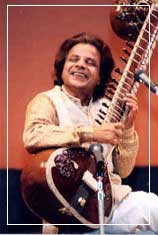
Dr. Chandrakant Sardeshmukh
What a great honour to play with such a legendary sitar player from India.
A brief insight of his life: He started his musical journey at the age of 4 and was soon recogonised as "a sheer prodigy" by Pandit Ravi Shankar,who then accepted him as his student. He had a rare privilege of studying traditional Indian Classical Music of Maihar Senia Gharana under the guidence of Shrimati Annapurnadevi Ravi Shankar, who is a gifted legendary Indian artist, being the daughter of Baba Allaudin khan and wife of Pandit Ravi Shankar.
It a previlage to even attempt to write these names.Needless to say anything about them and Dr.Sardeshmukh upbringing,a legend arrived at EMU and blessed us all.
------------------------------------------------------------------------
Audio Arts: Legal issues and Copyright ownership
Australian Copyright council
*communicate
*reproduction
*composer/performer
*publisher/record company
*Scheme of contractual variations: Creative Commerce
-----------------------------------------------------
Creative Computing:Msp
More ojects we looked at besides poly and poly~
thispoly~:Reports poly~ instance number, controls voice allocation and muting.Free's the voice when value equals zero.At the end of the patch,the patch chord goes in thispoly~.
zl:all-in-one things list
iter:Unpacks lists one element at a time through its outlet
counter:Counts bangs at its left input.

References:
(1)Sardeshmukh,Dr.Chandrakant .2006.Guest Presentor at the Forum.University Of Adelaide.14 September'06
(2)Haines,Christian.2006.Audio Arts lecture on Sound Design for Games.University Of Adelaide.12 september'06.
(3)Haines,Christian.2006.Creative Computing lecture on Max/Msp.University Of Adelaide.14 september'06.
(4)Msp Tutorials and Topics.2006.Cycling 74
(5)http://www.darshanam.com/profile1.asp
official website of Dr.Chandrakant Sardeshmukh

Sunday, September 17, 2006

Week 7

Game Project : Emergence Games


My group has finally given me some visual clues of the game.The plot is as follows and the logo is nearly done.
This single player role-playing game is about upgrading a series of Driods or Bio Enhanced Mercs.You choose which missions you want to complete which gives you a path to follow and create a story line around the path.This provides exceptional re-playability.By choosing and completing missions from one faction,more missons path will become available to the player for that faction.Completing some missions for one faction may lead to opposing factions mission paths to become unavailable.
------------------------------------------------------------
Creative Computing
Main topics discussed:
Application Structure, GUI examination
• MIDI mapping in MSP
• MIDI control data and ranging sampler voice control

Introduction to poly and poly~
Poly: Poly does polyphonic voice allocation.
Poly~:Polyphony and DSP manager for patchers.It loads a specially-designed subpatch from disk (containing in~, in, out~ and out instead of the traditional inlet and outlet objects) once for each "voice" indicated by the value of the second argument.

(Java Script User Interface)jsui:The jsui object is a general purpose user interface object driven by javascript.

menubar : Puts up a menu bar of custom menus
Key:Report events from the computer keyboard.To look for specific keys, use key followed by select…here is the patch to allocate space bar for a specific function.
#P window setfont "Sans Serif" 9.;
#P window linecount 1;
#P newex 128 163 40 196617 key;
#B color 5;
#P newex 128 185 51 196617 select 32;
#P message 128 207 103 196617 You hit the space bar;
#P newex 128 227 36 196617 print;
#P connect 1 0 0 0;
#P connect 2 0 1 0;
#P connect 3 0 2 0;
#P window clipboard copycount 4;

Hint: pop-up floating hint/tooltip for user interface assistance..
----------------------------------------------------------------------

Forum Presentation : Derek Pasco
I have known derek for a fair while now and its amazing that he was the guest this week in the forum.First time I met him was at wheatsheaf hotel,he was playing his set for COMA.He used a quote by John Cage for one of his piece,"if something is boring after two minutes, try it for four. If still boring, then eight. Then sixteen. Then thirty-two. Eventually one discovers that it is not boring at all".But he didnt ackowledge the creator of this quote.I went up to him and said that I really liked your performance but why didnt you acknowledge john cage and he replied that he did has acknowledged him in the past,when ever he has used his quotes..Ah well my memories of not using quotations are still quite fresh and I have paid alot for that.I have certainly understood the need and obligation to admire anything you ever use which is not your own creative product.
Derek spoke alot about improvisation techniques in a group scenerio which I personally believe were quite self explainatery.All of them existed for their own purpose and if you want to go to a theoritical understanding of improvisation they are brilliant.If I ever feel I am lacking the ideas for my own improvisation group I will certainly look back at the handout.
There were some great bits in the group collective effort esp with what Marco was doing.I really liked his idea of using contact microphone,keys and measuring tapes.The sounds he was producing were quite fascinating and in a way quite organic.
"Music...has to do alot of areas which are magical rather than logical.
The great artists,rather than just getting involved with discpline,get to understand love and allow the love to take shape".

First three lines of the handout from Chapter 16 of Elements of Improvisation,which stephen gave us says it all.I hope my group understood this,rather I should say,everyone in my group understood this.Or even if they do,it only applies to their personel music making.My enthusisam seems to disapear day by day.I am forcing myself to be present there and feel a bond.Some people in this world would never allow their love to flow,rather all they can contribute to the society is the evilness of their frustrated soul.
Stephen,the idea of forming improvisation groups is brilliant.Please carry forward this tradition.Regardless of what I have stated in the lines above,the whole experience is still quite magical.

Refrences:
(1)Haines,Christian.2006.Audio Arts lecture on Sound Design for Games.University Of Adelaide.5 september'06.
(2)Haines,Christian.2006.Creative Computing lecture on Max/Msp.University Of Adelaide.7 september'06.
(3)Whittington,Stephen.2006.Handout on Techniques for Improvisation.University Of Adelaide.7 September'06
(4)Msp Tutorials and Topics.2006.Cycling 74
(5)Derek,Pasco.2006.Presentation a the Forum.University Of Adelaide.7 September'06

Tuesday, September 12, 2006

Week 6

Game Design for "Synthetic Echo"

Assets list :

Menu
Music
Button click Sfx

In game
Music
Ambient sounds:
-Traffic
-Wind
-People shouting (cannot understand what they’re saying)
Automatic Rifle firing sfx
Grenade Launcher sfx (firing+pump action reload)
Explosion for grenade
Gunshot riccochett off cement/metal/dirt
Bullet hitting and lodging into flesh/armour
Heavy (male) sfx:
- Footsteps on cement
- Footsteps on grass
- Footsteps dirt/rubble
- Heavy leather and metal plating clanging while moving
Light (female) sfx
- Footsteps on cement
- Footsteps on grass
- Footsteps dirt/rubble
- Light fabric clothing while moving

Character Voices
Dez (male - heavy weapon specialist)
Heavy whisper, low tone, through breathing mask
- “Let’s get moving”
- “Here’s some chumps, let’s take em”
- “Taken him out”
- Being hit by bullet “urgh” several different versions
- Being killed “arghh”
Vess (female – stealth)
Strong, confident, sly, through communication device
- “Come on, we need to get moving”
- “Target sighted”
- “Another one down”
- Being hit by bullet “urgh” several different versions
- Being killed “arghh”

Ending Credits
Music